ServicesRoof Repair
Roof Repair in Roxboro
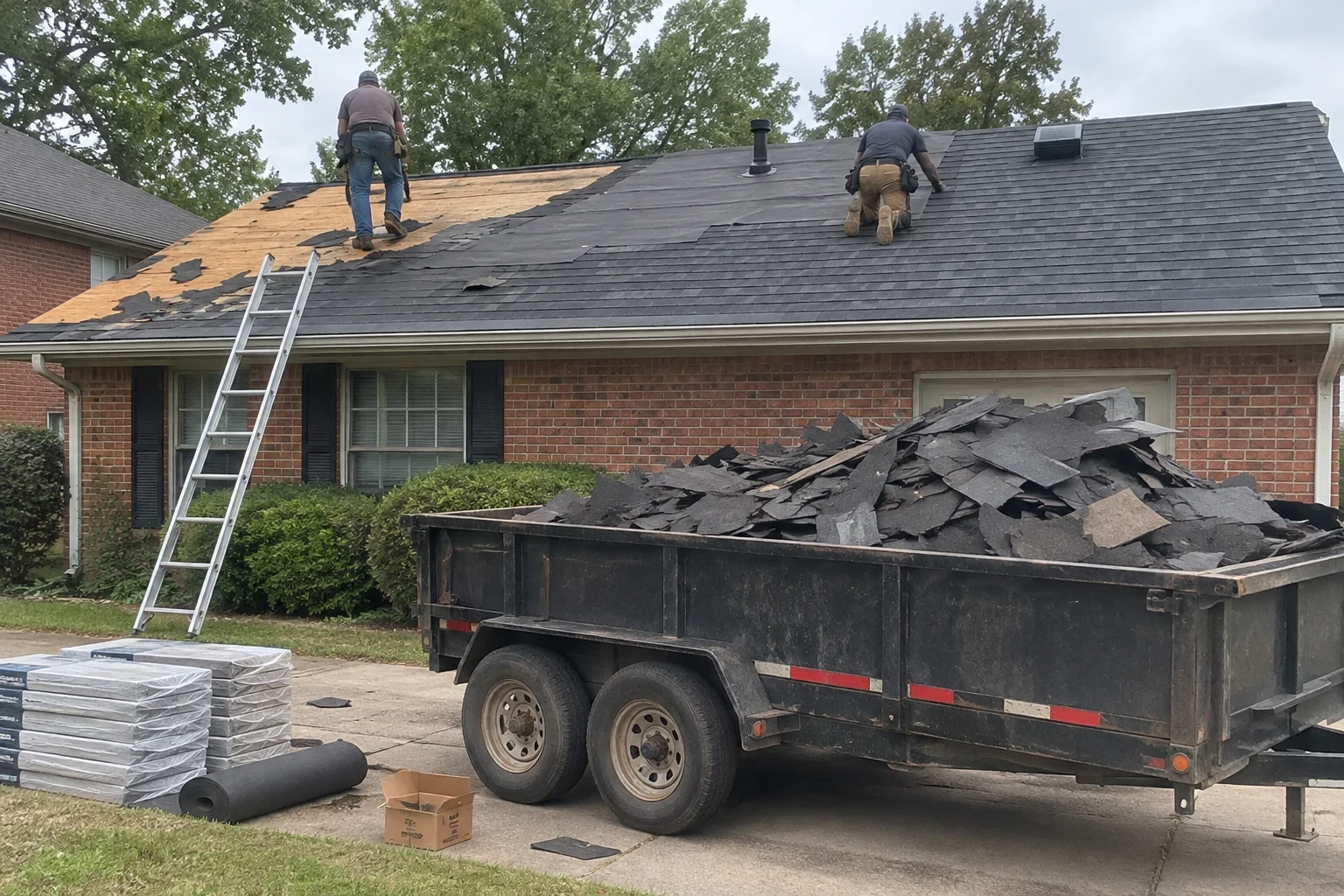
Most leaks come from one bad spot, not a worn-out roof. We track down the source, take photos so you can see it, and make the fix with shingles, metal or flashing that fits what is already on your home.
Is a repair enough?
Roof trouble usually begins in one place. The rubber boot on a vent pipe bakes and cracks. Step flashing at a wall works loose. A gust peels up a row of shingles and the sealant never sticks again. When the decking underneath is still firm and the roof has years left, fixing that one area is the honest answer.
The right fix depends on the material. Asphalt shingles, exposed-fastener metal and rolled low-slope roofing break down in different ways and call for different repairs. A patch that holds on one can trap water on another.
Sometimes the whole roof is near the end of its life. When that is the case, you will hear it from us, along with the pictures that back it up. Then you can weigh a repair against roof replacement with the facts in hand.
What our roof repair covers
Tracking the leak
A drip on the ceiling can be several feet away from the hole that let it in. We follow the water trail in the attic, then check the roof above until we find the true source.
Replacing shingles
We lift out the damaged pieces and fit new ones, nailed and sealed by the book. We hunt for a close match in color and style and let you know early if your shingle is out of production.
Flashing and vent boots
Leaks love the spots where the roof meets something else, like a chimney, a sidewall, a skylight or a pipe. We reset or replace step flashing, counter flashing and split rubber boots. We do not just slap tar on them.
Metal roof work
On screw-down metal, the rubber washers under each screw break down after years of summer heat. We put in new fasteners, reseal the laps and replace panels that are dented or rusted through.
Low-slope areas
Porch roofs and add-ons often have rolled roofing or modified bitumen. We fix blisters, split seams and low spots that hold water, using material that bonds to what is already there.
Signs your roof needs a repair
A stain on the ceiling
Even a dry brown ring means water got in at some point. It usually gets worse with the next hard rain.
Shingles on the ground
A few shingles in the yard after a summer thunderstorm means the seal strips let go. Neighboring shingles are often loose too.
Nails backing out
Nail pops push up through shingles and leave a small hole. They are easy to miss from the ground but show up clearly in our photos.
Cracked boots around vent pipes
Rubber boots crack in the sun long before the shingles wear out. It is one of the most common leaks we fix.
Loose or rusty metal
On metal roofs, look for screws that have backed out, rust streaks at the laps or panels that rattle in the wind.
How a repair visit goes
- 1
Free inspection
We climb up and look closely at the trouble spot, then check the attic from below when there is access. We look at the roofing material, the flashing and the decking around the damage.
- 2
Photo report
You get pictures of each issue with a short, plain note on what it is. We mark what needs work now and what can wait.
- 3
Your quote by phone
We go over the price item by item on a call. You will not get pushed, and nothing gets added that you did not agree to.
- 4
Repair and cleanup
Most fixes are done in a few hours. We cover plants and the ground below, sweep the yard for nails with a magnet and send you photos of the finished repair.
What sets the price of a repair
We do not use a flat rate, because no two leaks are the same. Most of the difference comes from what sits under the shingles or panels. After we have looked at your roof, we give you a firm number by phone before anyone picks up a tool.
- What the roof is made of
- Shingle repairs go fastest. Metal panels and low-slope roofing need their own parts and more time to seal properly.
- How far the damage runs
- Swapping one vent boot is a short job. Redoing a full valley or a long stretch of wall flashing takes more hours and more material.
- Rot in the decking
- When water has soaked into the plywood, we cut out the soft piece and put in new wood before any roofing goes back down.
- Slope and reach
- A steep pitch, a two-story wall or branches crowding the roof means more safety gear and slower, careful work.
Roof repair questions
Something not covered here? (336) 962-4225
Can you match my existing shingles?
Often close, but not always perfect. Sun fades shingles over the years, and some older product lines have been discontinued. We bring samples to the roof and show you the nearest match before work starts.
How do I know if I need a repair or a new roof?
If the trouble is in one spot and the rest of the roof is sound, fix that spot. If shingles are curling and shedding granules everywhere, or leaks keep popping up in new places, roof replacement may be the better money. The photos from our inspection make the difference easy to see.
Will my insurance pay for the repair?
That comes down to what caused the damage. Wind and hail are often covered, while plain aging usually is not. We offer adjuster meetings and help through the insurance claim process. Our storm damage repair page goes into more detail.
Do you repair metal and flat roofs too?
Yes. We fix exposed-fastener metal, standing seam and the low-slope roofing found on porches and additions. Each one calls for its own sealants and parts, and we use what is made for that roof.
Is there a way to spread out the cost?
There is. Acorn Finance offers financing for our roof work. Bring it up when we walk through your quote on the phone, and we will explain how it works.
Know what is wrong before the next hard rain
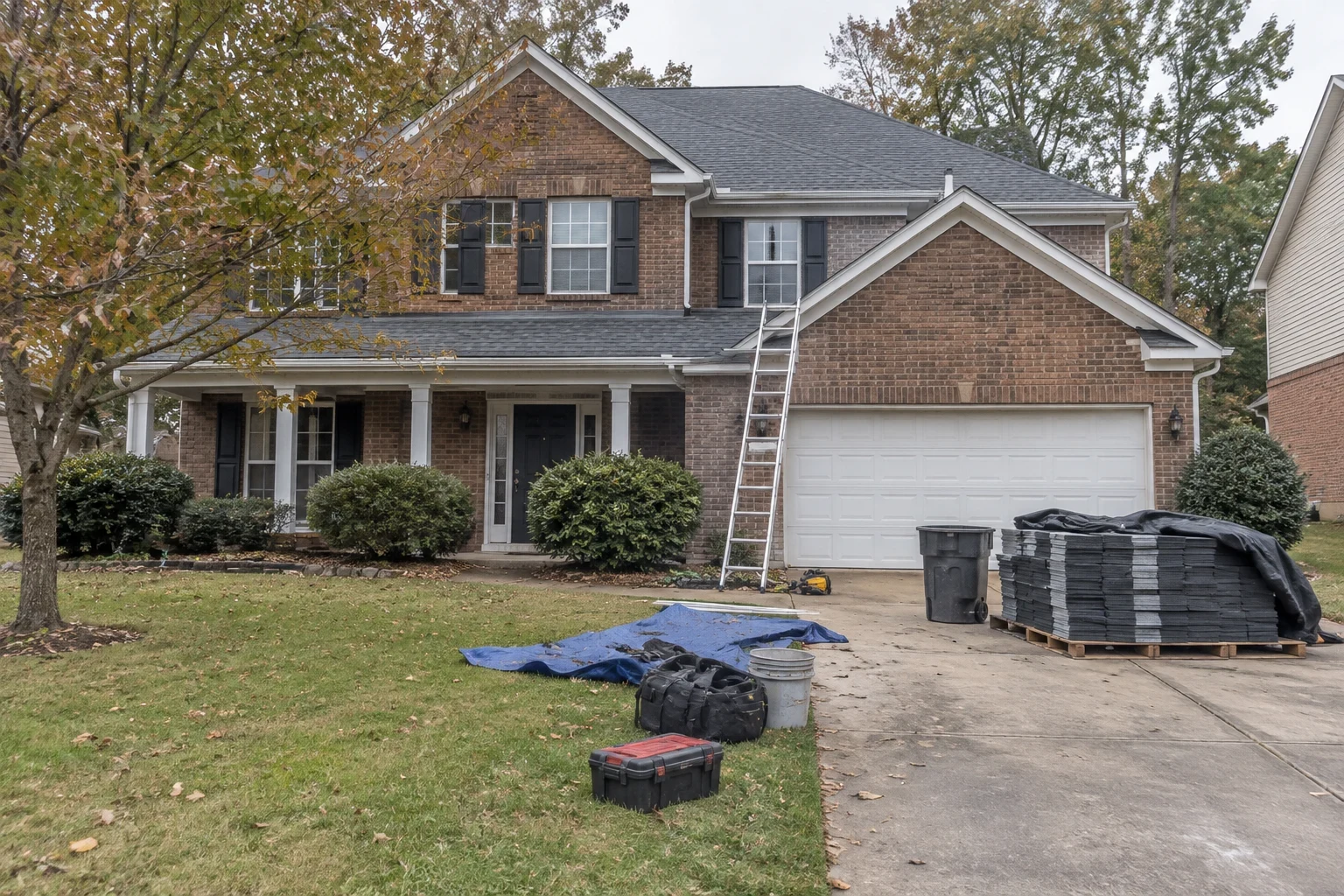
Our roof check costs you nothing. You get photos of every problem we spot, with notes, and you pick what gets fixed.