ServicesSiding
Siding Repair and Replacement in Roxboro
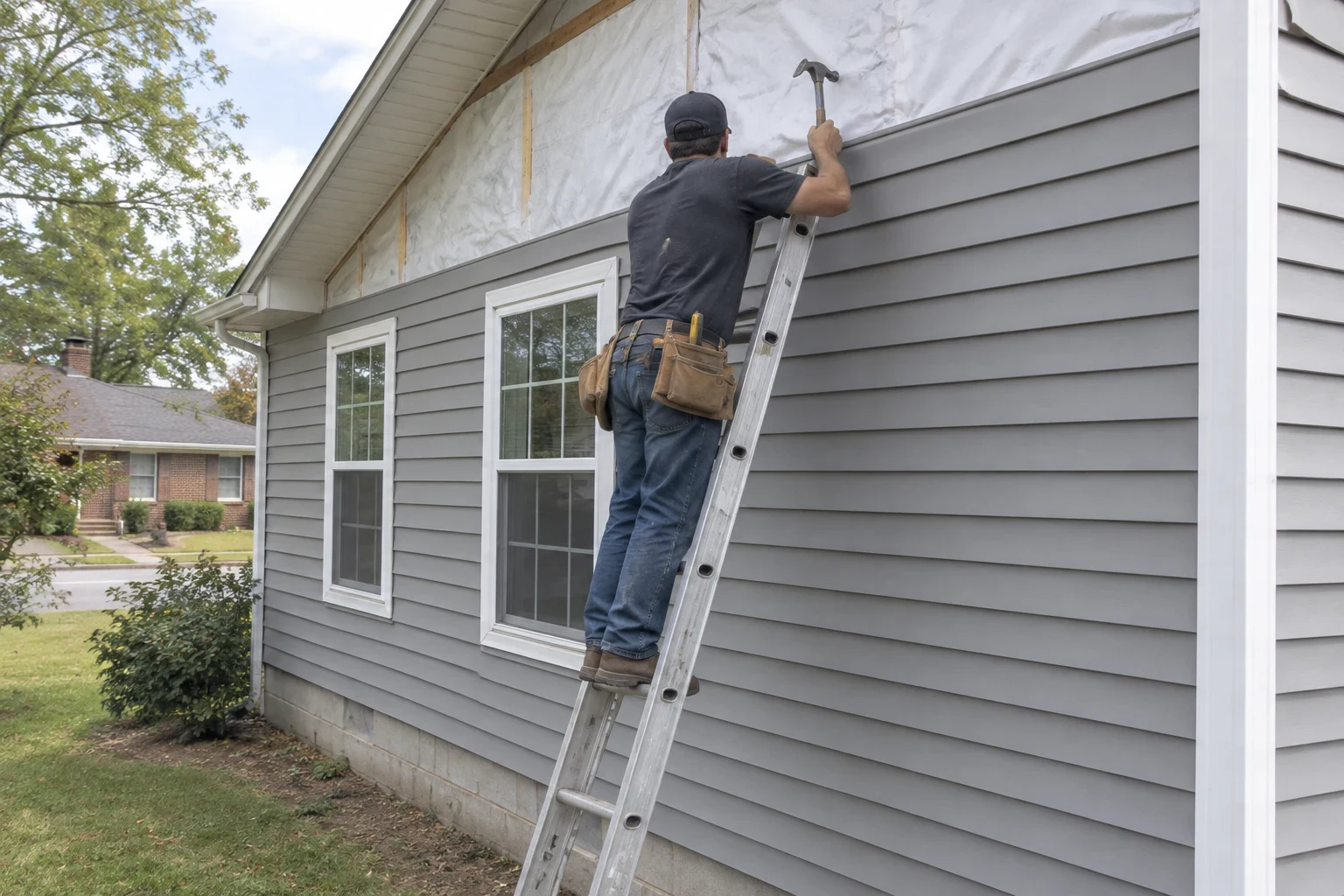
We fix and replace siding on your home, and we explain your options before any work starts. You see the damage in photos and how vinyl, fiber cement and engineered wood compare. Then you pick what fits your house and budget.
What Siding Work Covers and When It Makes Sense
Siding keeps rain off the wood that holds your home up. Once a panel splits, bows or pulls away, water slips in behind it and soaks the sheathing and framing. Most people don't notice until a board feels soft when pressed or a stain shows up on an inside wall.
Some jobs are small. A storm tears off a few vinyl panels, or one wall has a rotted board near the ground. Others call for a full replacement because the old siding is brittle or the wall behind it is wet. We look first, then tell you which one you have.
Most of our calls start with a question about material. Should you stay with vinyl, or is fiber cement worth more? We explain the trade-offs in plain terms, without pushing the priciest option.
What Our Siding Work Includes
- Vinyl siding
- Vinyl is the most common choice and the easiest on the budget. It does not rot and needs little upkeep. It can crack when struck hard in cold weather and can sag if installed too tight, so we nail it loose enough to move.
- Fiber cement siding
- Fiber cement is heavy, stiff and does not burn or rot. It holds up well to hail and wind. It costs more and takes longer to install because it is cut with special blades and needs careful handling.
- Engineered wood siding
- Engineered wood gives you the look of real wood with a treated core that resists moisture and insects. It is lighter than fiber cement and handles impacts well. It needs good clearance from the ground and roof to stay dry.
- Spot repairs and panel matching
- For storm damage or a few bad boards, we replace only what is damaged. We try to match the profile and color, and we tell you up front when an exact match is not possible.
- What goes behind the siding
- On replacements we check the sheathing, replace soft spots and put on new housewrap. We flash around doors, window openings and where walls meet the roof, since those joints are where most leaks start.
Signs Your Siding Needs Attention
Cracked or missing panels
Hail and wind can split vinyl or pull pieces loose. Every gap lets rain reach the wall behind it.
Warping or buckling
Wavy vinyl usually means it was nailed too tight or sat near a heat source. It will keep pulling until it cracks.
Soft or swollen boards
Press on the lower boards near the ground and along the roofline. If they feel spongy, water is already inside the board.
Mold, mildew or stains running down
Dark streaks under a joint or at the corners point to water getting behind the face. In humid summers that trapped moisture feeds mold fast.
Bubbling paint or damp spots inside
Paint that lifts on an inside wall, or a stale, damp odor in a room along an exterior wall, often leads back to siding or flashing that has let go.
How a Siding Job Runs
- 1
Walk-around and photo report
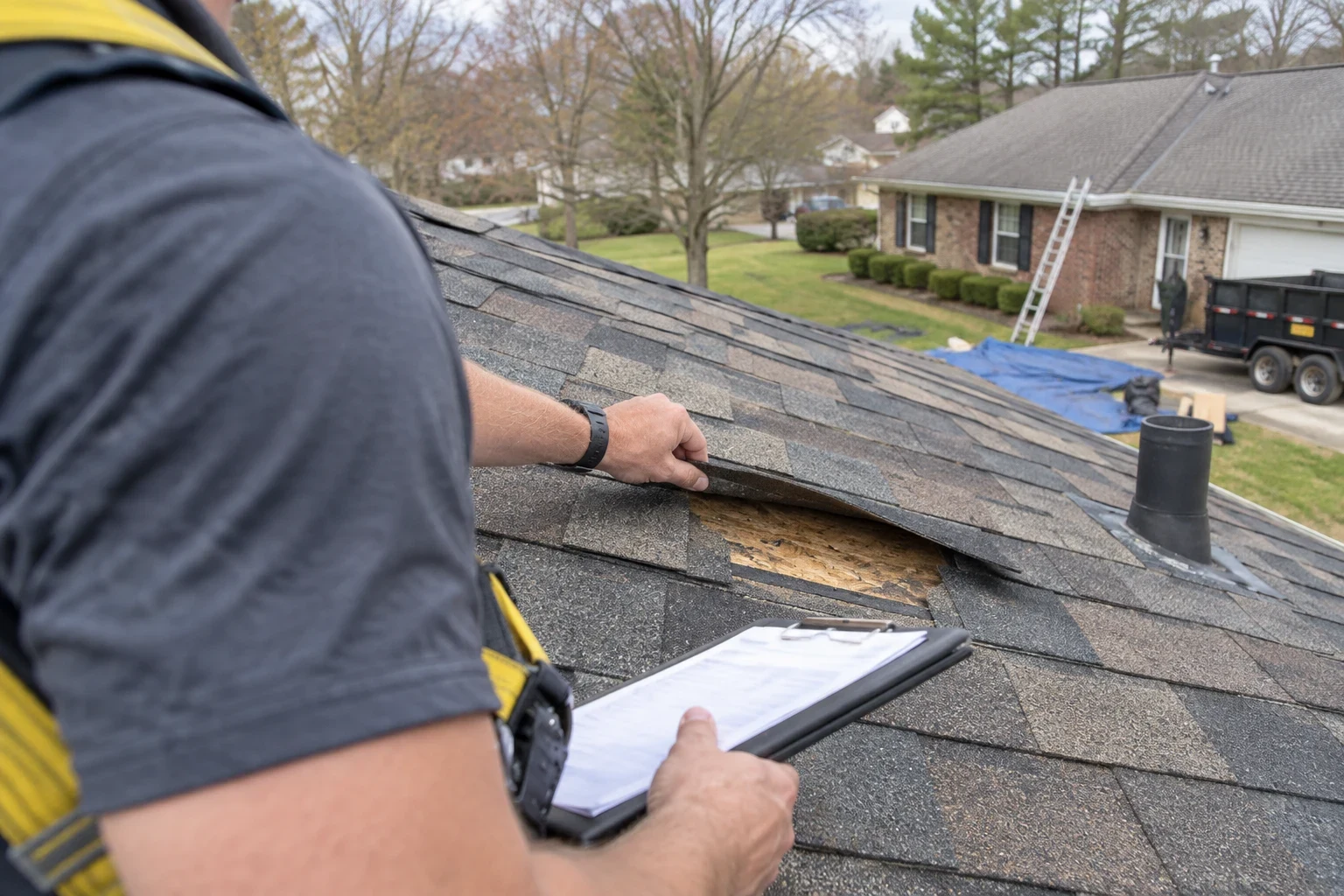
We walk every wall, press on suspect boards and take pictures as we go. Those pictures go into a report so you can see the damage for yourself, along with our recommendation.
- 2
Pick the siding together
We go over vinyl, fiber cement and engineered wood for your house, including cost, upkeep and how each handles weather. Your estimate lists each item so you know where the money goes.
- 3
Tear-off and wall repair
We strip the old siding in stages and close each wall back up before moving to the next, so rain has little chance to get in. Bad sheathing gets replaced and new housewrap and flashing go on.
- 4
Install and clean up
New siding goes up with the right nailing and clearances for the material. We pick up nails and scraps with a magnet and walk the job with you before we leave.
What Moves the Cost of Siding
Siding prices swing more than most people expect. The material you pick and what turns up behind the old boards matter most. We price the job after we have seen the walls, and the estimate breaks out each part of the work.
- Material choice
- Vinyl costs the least. Engineered wood sits in the middle, and fiber cement costs the most to buy and to put up.
- Size and shape of the house
- More wall area means more siding. Gables, dormers and lots of corners add cuts and labor.
- Condition behind the siding
- If the sheathing or studs are soft, we repair that wood first so the new boards have something solid to nail into. You see photos of it before that work is added to your estimate.
- Ladder and lift work
- Second-story walls, sloped lots and narrow side yards need more staging, and the crew moves slower on them.
- Trim and details
- Corner posts, soffit pieces and trim around openings add up, especially on older homes with a lot of detail.
Siding Questions We Hear Often
Something not covered here? (336) 962-4225
Can you just repair a few panels, or do I need all new siding?
Often a repair is enough. If the damage is limited and the wall behind it is dry, we replace only the bad pieces. If the old siding is brittle all over or water has gotten behind large areas, we will tell you and show you why in the photo report.
Can you match my existing siding?
We try. Vinyl colors fade with sun, and some profiles are no longer made, so a new piece may look slightly different. We tell you before we start, and sometimes moving original panels from a hidden wall to the front gives a closer match.
Is fiber cement worth the extra cost over vinyl?
It depends on how long you plan to stay and what matters to you. Fiber cement handles hail and fire better and feels solid. Vinyl costs less and needs almost no upkeep. We lay out both so you can weigh them.
Will insurance pay for hail or wind damage to my siding?
It might, if a storm caused the damage. We take photos of every damaged wall, can be there when the adjuster comes out, and walk you through each step of the claim. Whether the damage is covered is up to your insurance company.
Do you offer financing?
Yes. You can finance the work through Acorn Finance. Bring it up on the phone and we will go over the basics with you.
How long does a siding replacement take?
Most homes take a few days, depending on size, the siding you choose and what we find under the old boards. Fiber cement takes longer than vinyl. We give you a timeline before work starts.
Find Out What Your Siding Needs
We will look over your walls, photograph what we find and explain your material options in plain terms. No pressure, just a clear picture of what your home needs.